Hey there, fellow dog lovers! Thank you so much for sticking with me today as we dive into a topic that is close to my heart. On my page, you’ll always find useful dog, cat, and pet content, and today we are talking about the “underdogs” of the intelligence world.
If you’ve ever owned a Border Collie, you know they can basically learn to do your taxes by the time they are six months old. But what about the dogs on the other side of the spectrum? The ones that look at you with a blank stare when you say “sit” for the fiftieth time?
In the canine world, we often talk about the “smartest” breeds, but today, we are celebrating the 10 breeds that are—let’s be honest—a little slower on the uptake. But here is the secret: they aren’t “dumb.” They just have a different way of looking at the world. Grab a coffee, settle in, and let’s talk about our favorite “low-speed, high-love” pups!
The Science: What Does “Smart” Even Mean?
Before we get to our list of 10, let’s talk about where this data comes from. Most of our understanding of dog intelligence comes from Dr. Stanley Coren, a world-renowned neuropsychological researcher and author of the famous book, “The Intelligence of Dogs.”
Dr. Coren’s rankings are based on “working and obedience intelligence.” To get a high ranking, a dog has to understand a new command in fewer than five repetitions and obey the first command 95% of the time. The 10 breeds on our list today are at the bottom because they often need 80 to 100 repetitions to learn something new, and they might only listen to you 25% of the time.
But as any American dog owner will tell you, a dog that doesn’t “sit” immediately isn’t stupid—they might just be stubborn, independent, or simply too busy dreaming about their next nap!
1. The Afghan Hound: The Glamorous Independent

Coming in at #1 on the “least obedient” list is the stunning Afghan Hound. These dogs are the “supermodels” of the dog world—gorgeous, elegant, and notoriously aloof.
Why they are “slow”: Afghans are very cat-like. They have a massive sense of self-worth. If you tell an Afghan to sit, they aren’t thinking, “How do I please my owner?” They are thinking, “Why should I?” They are independent thinkers who value their own autonomy more than a piece of kibble. They are brilliant at hunting, but they don’t see the point in “tricks.”
2. The Basenji: The African Bush Icon

The Basenji is famous for being the “barkless dog,” but they are also known for being incredibly difficult to train in a traditional way.
Why they are “slow”: Basenjis are ancient dogs that were bred to hunt in Africa without much human interference. They had to be smart enough to survive on their own. This means they are extremely stubborn. They don’t have that “eager to please” gene. Training a Basenji is more like a negotiation than a lesson.
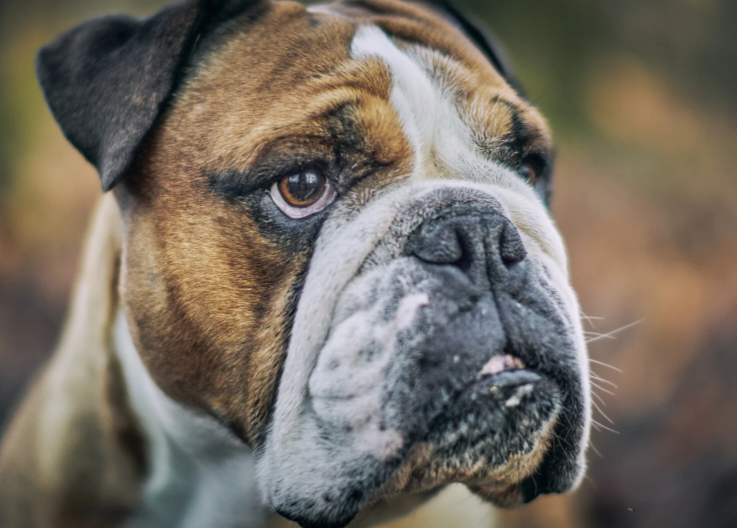
3. The Bulldog: The Lovable Couch Potato

We all love the English Bulldog! They are the mascots of many American schools and teams for a reason: they are tough, loyal, and incredibly chill.
Why they are “slow”: Bulldogs were bred to be immovable. That trait carries over into their training. They aren’t “slow” because they don’t understand you; they are slow because they are physically and mentally built to take their time. A Bulldog doesn’t see the rush. If they decide they aren’t moving, no amount of “come here” is going to change that.
4. The Chow Chow: The Lion of the Living Room

The Chow Chow is a beautiful, dignified breed with a famous blue-black tongue. In the U.S., they are known for being very protective “one-person” dogs.
Why they are “slow”: Chows are naturally dominant and can be quite snooty. They don’t live to serve humans. To a Chow Chow, obedience training feels a bit beneath their dignity. They are incredibly smart in terms of guarding their home, but when it comes to “shaking paws,” they’d usually rather be napping.
5. The Borzoi: The Aristocratic Spirit

The Borzoi (or Russian Wolfhound) is a sight-hound built for speed and grace.
Why they are “slow”: These dogs were bred to chase wolves across the Russian tundra. When you are built for that kind of high-stakes focus, “sit” and “stay” feel a bit trivial. They are very sensitive and independent. If you push them too hard with training, they will simply shut down. They require a very gentle, patient hand.
6. The Bloodhound: The Single-Track Mind

A Bloodhound can follow a scent trail that is days old for miles and miles. This is a massive intellectual achievement, yet they rank low on obedience lists.
Why they are “slow”: When a Bloodhound’s nose turns on, their brain (and ears) turn off. They are “specialists.” If they aren’t listening to you, it’s because their nose is telling them a story that is much more interesting than your command. They aren’t dumb; they are just deeply, deeply focused on their “job.”
7. The Pekingese: The Little Emperor

Bred to be companions to Chinese royalty, the Pekingese still thinks they are the center of the universe.
Why they are “slow”: They were never bred to “work.” Their only job was to be pampered and look pretty. Because of this, they are incredibly stubborn and have a very high opinion of themselves. If they don’t obey you, it’s usually because they feel like you didn’t ask nicely enough!
8. The Beagle: America’s Sweetheart Distraction

Beagles are one of the most popular breeds in the States because they are immeasurably cute and great with kids. But ask any Beagle owner about “recall,” and they will just laugh.
Why they are “slow”: Like the Bloodhound, the Beagle is a scent-hound. They are also incredibly food-motivated. A Beagle will do anything for a treat, but the moment the treat is gone, so is their attention span. They are easily distracted by every smell, leaf, and squirrel in the neighborhood.
9. The Mastiff: The Gentle Giant

Mastiffs are massive, heavy, and full of love. They are the ultimate family protectors.
Why they are “slow”: Everything about a Mastiff is on a “time delay.” They are heavy dogs that move slowly, and their mental processing is the same. They are also extremely sensitive. If you use a harsh voice, they will get upset and stop learning. They need short, happy sessions and lots of positive reinforcement.
10. The Basset Hounds: The Stubborn Clowns

With those long ears and droopy eyes, the Basset Hound is a comedy icon.
Why they are “slow”: Bassets are a combination of “nose-focused” and “unbelievably stubborn.” If they don’t want to do something, they will literally turn into a 60-pound sack of flour and refuse to budge. It’s not that they don’t understand—it’s that they have calculated that not moving is more beneficial to them than moving.
The “Why” Matters: It’s Not About IQ, It’s About Personality
In America, we love a good success story, and the success story of these 10 breeds is their heart. While a German Shepherd is a “straight-A student,” these dogs are the “artists and the rebels.”
They require more consistency, routine, and patience. Just like I always say when we talk about bringing a puppy home: it’s exactly like having a child. You have to be the parent. If you let them sleep on the bed once, they will sleep there forever! These 10 breeds need a leader who is patient and understands that they might need 100 tries to get it right.
Tips for Training Your “Slow Learner”
- Keep it Short: Don’t train for more than 5-10 minutes. Their “batteries” for learning run out fast.
- High-Value Rewards: If you have a Beagle or a Bulldog, you need the “good stuff”—think chicken or cheese, not dry kibble.
- Be Patient: Never yell. These breeds are often more sensitive than the “smart” ones.
- Focus on the Bond: At the end of the day, having a dog that loves you is more important than having a dog that can do 50 tricks.
Final Thoughts for My Pet Family
Whether you have an Afghan Hound who thinks she’s a queen or a Basset Hound who refuses to walk in the rain, remember that their “slowness” is part of their charm. They remind us to slow down, to laugh at the little things, and to love unconditionally—even when they “forget” what “sit” means for the third time today.
I wish so much joy and patience to every pet parent out there with one of these beautiful goofballs!
Thank you so much for sticking with me! I hope this deep dive into the 10 “least obedient” (but most lovable) breeds was helpful for you. Don’t forget, my page is always here with more useful dog, cat, and pet content to help you on your journey as a pet parent. We are all in this together!
Leave a Reply